
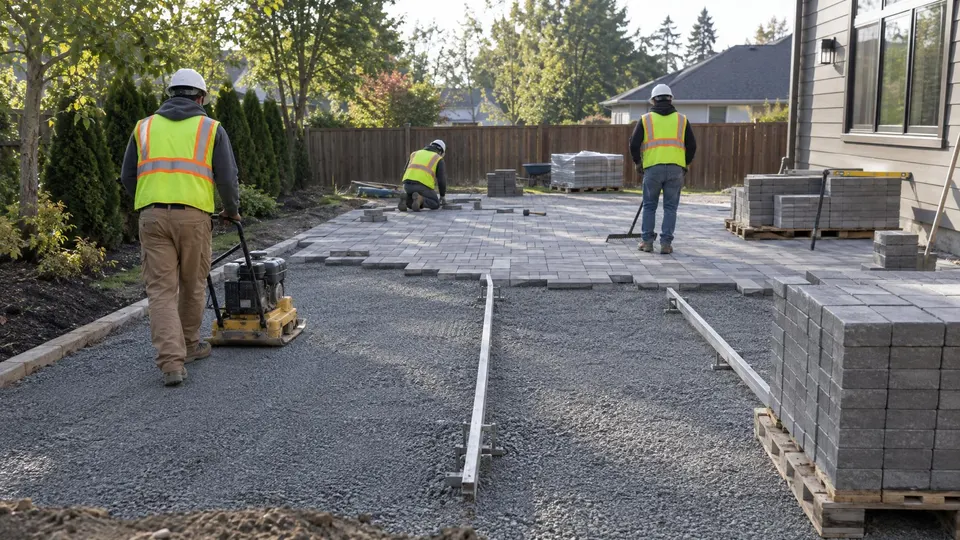
How a patio is built, step by step.
Six stages from stakes in the grass to a finished surface. Here is what happens beneath your patio, and why each layer matters.
Scroll to watch it go in.
- 01
Design and stake the layout
We walk the yard with you, agree on size, shape and materials, then stake the outline and call 811 so buried utilities are marked before anyone digs. You see a plan before a shovel moves.
Layout and utility locate - 02
Excavate to depth
The patio footprint is dug out to the depth the base needs, with the slope set so water runs away from the house. Red clay and organic soil are removed, not buried under the new surface.
Excavation - 03
Compact the subgrade
The exposed soil is compacted in passes with a plate compactor, and geotextile fabric goes down where soft soil calls for it. Everything above can only be as stable as this layer.
Compaction and fabric - 04
Build the stone base
Crushed stone goes in as thin lifts, each compacted before the next, until the base reaches its full depth. A well-built base is what keeps a patio flat through wet winters and heavy use.
Compacted stone base - 05
Set the bedding and pavers
A screeded layer of bedding sand gives a perfectly level bed. Pavers are laid in your pattern, cut to fit curves and borders, then compacted so every unit sits tight and even.
Bedding sand and pavers - 06
Lock it in
Edge restraints hold the perimeter, polymeric sand is swept into the joints and activated, and the surface is cleaned and, if you choose, sealed. Then the furniture goes out.
Edges, joint sand and sealer
What a typical project looks like
- 1
Visit and design
We walk the yard, talk goals and budget, then bring a plan and a written estimate.
- 2
Approvals and locates
Permits, HOA paperwork and an 811 utility locate are handled before digging.
- 3
Build
Excavate, compact, build the base, set the surface and finish walls, features and lighting.
- 4
Walk-through
We inspect together, clean up and give you care guidance and warranty details.
How to get ready
- Tell us about pets, children, irrigation and anything buried that we should know about.
- Make sure equipment can reach the work area, or tell us about gates and narrow access.
- Move furniture, planters and toys out of the work area.
- Keep a few days free of heavy rain forecasts if you can; we plan around weather.
Questions, answered
How much does a hardscape project cost?
Published U.S. planning ranges commonly run about $15 to $30 or more per square foot for paver patios, more for natural stone and porcelain and less for stamped concrete, with retaining walls roughly $30 to $80 or more per square foot of wall face. The Cost Estimator and Backyard Planner on this site give planning ranges; a free site visit gives a firm written estimate. Call 615-431-3789.
How long does a patio or outdoor living project take?
A typical paver patio takes about a week or two once permits and materials are lined up. Larger projects with kitchens, fireplaces, walls and structures take longer, and we give you a schedule before we start.
Do I need a permit?
Patios on grade often do not, but roofed structures, taller retaining walls, decks, gas and electrical work frequently do, and many HOAs require approval. We tell you what applies to your project and help with drawings and paperwork.
What makes a patio last on Middle Tennessee clay?
The base. We excavate to depth, compact the soil, add geotextile where needed and build the stone base in compacted lifts with the surface sloped to drain. That is what keeps pavers from sinking and walls from leaning.
Pavers, stamped concrete or natural stone: which should I choose?
Pavers are flexible and repairable, stamped concrete is seamless and economical, and natural stone has unmatched character. Porcelain is the modern, low-maintenance option. We show samples and costs for each in your own yard light.
Ready to see it in your yard?
Start with a free design visit.